|
JOHN
FREDERICK SEIBERLING 1918-2008
'An
American hero' dies
Retired congressman
who represented Akron for 16 years praised for
his tireless work creating Cuyahoga
Valley park, preserving
wilderness
By Bob Downing
Beacon Journal staff writer
http://www.ohio.com/news/26217469.html?page=all&c=y
Published on Sunday,
Aug 03, 2008
Photo
gallery
John F. Seiberling, the retired Akron
congressman who helped create the Cuyahoga Valley National Recreation Area,
died Saturday morning at his home in Copley Township.
He was 89.
Mr. Seiberling,
who was born in Stan Hywet Hall but represented
blue-collar Akron in the U.S. House of
Representatives for 16 years, was remembered by some as the conscience of Congress
and by others as one of America's
great conservationists.
His death was attributed to respiratory
failure caused by chronic lung disease. He had been hospitalized June 29 but
was released to go home, where he died about 7 a.m. Saturday.
''Without John Seiberling,
there would be no Cuyahoga
Valley National
Park,'' said U.S. Rep. Ralph Regula, R-Navarre.
''He was a good person . . . and he left a
great legacy in the Cuyahoga
Valley park.
''He was the original environmentalist. He
was green way back when. He really was ahead of his time. . . . He was a man
of integrity and made his decisions based on what was right, not for their
political value. And he cared deeply for the country and its people.''
Mr. Seiberling
represented the old Akron-based 14th District in Congress from 1971 through
1986, frequently winning re-election with 70 percent of the vote.
He was a liberal New Deal Democrat, a
supporter of wilderness, arms control, free trade, world peace and historic preservation.
He was a fan of Shakespeare, poetry and bawdy limericks, as well as an
accomplished nature photographer and a lover of The Wind in the Willows.
He was soft-spoken and reserved yet strong
willed and at times feisty. He looked at the big picture, although he was a
man of detail. Known for his calm, statesmanlike approach, he operated with
caution and dignity, without flamboyance. He was known for his dry wit,
intellect, idealism and integrity.
He was a loner and proudly operated outside
the political system, refusing to be one of the boys, to join the
congressional club. Behind his back, staff and supporters called him St. John.
Before Congress, during his 17 years as an
attorney for the Goodyear Tire & Rubber Co. — the company his grandfather
founded — Mr. Seiberling once took a leave of
absence to avoid crossing United Rubber Worker union picket lines. That's
because he sided with the union at that time.
And in the wake of the May 4, 1970,
shootings at nearby Kent State University,
Mr. Seiberling ignored the political risks and
warnings of advisers to speak at a rally at the University of Akron,
advising students there to keep their protests peaceful.
It was his opposition to the Vietnam War
that led Mr. Seiberling to run for Congress in
1970, defeating 10-term Republican incumbent William Ayers to become a
51-year-old rookie.
Mr. Seiberling
served on the House Judiciary Committee that conducted the 1974 impeachment
hearings that led to the resignation of President Richard Nixon.
And in his 1986 congressional hearings to
probe the proposed takeover of Goodyear by raider Sir James Goldsmith, it was
Mr. Seiberling who drew the loudest cheers from Akron when he
confronted Goldsmith with the question: ''Who the hell are you?''
Part of Mr. Seiberling's
success as a congressman was attributed to his ability to work with local and
federal officials in a bipartisan effort.
He got Akron a new federal courthouse and a new
post office. He twice found federal money for the city's now-closed
trash-burning power plant, as well as funds for Quaker Square, the Akron-Canton Airport,
the Goodyear Technical Center
and various other projects.
''I'm not sure any of us can adequately
measure with words the immense contributions John has made,'' said Akron
Mayor Don Plusquellic. ''The true value of his work
will continue to reside in his legacy and will be enjoyed by and for many,
many generations to come. His is the work of a remarkable public servant with
a most generous spirit and creative mind. John Seiberling
and his family have helped build and sustain this city.''
''John Seiberling
was a darn good congressman,'' Summit County Republican Party Chairman Alex Arshinkoff told a reporter after Seiberling
retired. ''If I were a liberal Democrat, I'd say he was a great congressman.''
Mr. Seiberling
also left his mark far beyond Akron,
stretching across the American West and Alaska.
''John Seiberling
stands as a giant in terms of managing public lands . . . an American hero,''
said John Debo, superintendent of the Cuyahoga Valley National Park.
''What he did was really extraordinary, and he truly was one of America's
great conservationists.''
Right man, right time
He was a key figure in Congress in the
1970s and 1980s and played a key role in preserving America's wild lands —
with his constituents not always aware of the issues and what was going on,
said Dan Nelson of Bath Township, an emeritus history professor at the
University of Akron and author of A Passion for the Land: John F. Seiberling and the Environmental Movement (to be
published next year by Kent State University Press).
''Getting the Cuyahoga Valley
park created in 1974 only whetted his appetite. He got involved in Alaska and wilderness
lands. . . . He was the right man at the right time to get a lot accomplished,''
Nelson said.
Doug Scott of Seattle, a wilderness author
and policy director for Campaign for America's Wilderness, said Mr. Seiberling should rank among the very top
conservationists in the 20th century. Scott worked with Mr. Seiberling on wilderness measures while with the Sierra
Club and wrote The Enduring Wilderness: Protecting Our National Heritage
Through the Wilderness Act.
''Wilderness was his passion,'' Scott said.
''And that legacy will touch all Americans for generations. . . . He truly
was an American giant.''
Over the years, Mr. Seiberling
served as chairman of the Interior Committee's public lands and national
parks subcommittee and pushed 33 bills for 250 new and expanded wilderness
areas in 27 states.
In 1980, he and U.S. Rep. Morris Udall, D-Ariz., led the fight to approve federal protection for103
million acres under the Alaska National Interest Lands Conservation Act.
In all, Mr. Seiberling
played a key role in preserving 69 million acres of wilderness — that
included 54 million acres in Alaska
— in addition to 59 million acres of other federal parks, forests and
preserves.
Mr. Seiberling
made his first trip to Alaska
in 1975 and came away impressed.
In 1977, he held congressional hearings
across that state, helping him develop a photo collection of more than 3,000
Alaskan shots. He exhibited his photos in the Capital during the 1978 debate
and said the photos helped sway members of Congress.
He was widely saluted by national
environmental groups for his efforts to save the American wilderness —
efforts that earned him opposition from some Western and Alaskan politicians.
Bruce Hamilton, deputy executive director
for the national Sierra Club, compared the significance of Mr. Seiberling's efforts for Alaska to President Theodore Roosevelt's
creation of the national forests.
The Alaskan legislation was ''a tribute to Seiberling's persistence and statesmanship,'' he said.
''He was the expert and made quite the
difference. . . . Every wilderness advocate in the country knew him and
worshipped him,'' Hamilton said in a telephone
interview from San Francisco.
''Most considered John Seiberling to be their
second congressman.''
Conservationist is born
Mr. Seiberling's
desire to save wild America
may be traced to a childhood experience on a family vacation to an island in Lake Huron. On a return trip, the mainland forest near Hessel, Mich., had disappeared. The giant white
pines had been cut to be turned into matchsticks.
Later, in a quote still cited by his
ex-staffers, Mr. Seiberling said:
''We will never see the land as our
ancestors did. But we can understand what made it beautiful and why they
lived and died to preserve it. And in preserving it for future generations,
we will preserve something of ourselves. If we all have an interest in this
land, then we all have a stake in its preservation. There is no more
worthwhile cause.''
His associates said the words were
reflective of his goals.
But Mr. Seiberling
was proudest of spearheading the creation of the Cuyahoga Valley
park in 1974.
In 1971, as a rookie legislator, Mr. Seiberling's efforts to help sponsor legislation to
create a national park between Akron and Cleveland went nowhere.
In subsequent years, though, he introduced
the measure and worked to build public support for saving the Cuyahoga Valley.
Debo, the park's superintendent, said Mr. Seiberling ''had the foresight and the ability to
galvanize public support to preserve the valley. It was an incredible
accomplishment.''
Not everyone supported the idea. The
National Park Service didn't think the Cuyahoga Valley
deserved federal protection.
And even after winning approval in
Congress, the legislation came perilously close to dying. With President
Gerald Ford on a ski vacation in Colorado,
federal officials, opposed to a high-cost urban park, were urging a veto.
Mr. Seiberling
called Regula, who got an emergency phone call
placed to Ford by Akron's
Ray Bliss, the influentialformer national chairman
of the Republican Party. Other calls went to U.S. Sens. Robert Taft Jr. and
Howard Metzenbaum, as well as former Goodyear
Chairman E. J. Thomas.
Bliss told Ford that he should sign the
legislation if he wanted to win Ohio and to
veto it if he wanted to lose Ohio.
Ford signed the bill on Dec. 27, 1974.
Mr. Seiberling
called Ford's approval a Christmas gift for people in Northeast
Ohio. In later years, he said the park was far more than he ever
expected.
Mr. Seiberling
also protected the park from Ronald Reagan's secretary of the interior, James
Watt, who wanted to eliminate it as a federal park in the 1980s.
Mr. Seiberling
also played key roles in the 1977 federal surface-mining reclamation act and
a 1976 bill enlarging the federal Land and Water Conservation Fund. He also
pushed to eliminate acid rain in clean-air legislation.
He was unsuccessful in an effort to have
federal judges selected on merit instead of political appointment, and to
create a youth job corps.
He aggressively fought President Reagan
over federal budget cuts in the early 1980s.
His influence was felt beyond U.S. shores.
He played key roles in Congress in the birth of nations: the Republic of the Marshall Islands, the Republic
of Palau and the Federated States of Micronesia.
His staff saw Mr. Seiberling
as ''this cuddly distinguished college professor whom we all loved,'' said
Andrew Wiessner,a one-time
staffer and now a retired public lands consultant in Colorado.
Issues instead of politics
Mr. Seiberling
was different: He was the nonpolitical congressman, a good and dedicated public
servant, Wiessner said.
''He looked at the issues, not the
politics,'' Wiessner said ''There was a gentle way
about him. He was so scholarly and so thorough''
Long-time Seiberling
staffer Loretta Neumann added: ''He really was a Renaissance man, an amazing
man, a giant. . . . Everyone who ever worked for him said it was the best job
they ever had, and that was true for me, too. . . . He was the right person
at the right place at the right time to do the things he did.''
Neumann, who came to Mr. Seiberling's staff from the National Park Service, said
he hired her mainly to get the park established.
''At the time, I knew nothing about the
workings of Congress.'' she said. ''When I first met him, I told him so.
'Don't worry,' he said. 'I need you to teach me about parks. I can teach you
what you need to know about Congress.' ''
State Sen. Tom Sawyer, D-Akron, who
succeeded Mr. Seiberling in Congress, said he knew
Mr. Seiberling ''virtually my entire political
life.''
''He was a commanding figure throughout this
community and as soon as I got to Washington,
it was clear as it had ever been that he was beloved by the people who knew
him best,'' Sawyer said.
He had an ''enormous respect for the rule
of law and love of nation,'' Sawyer said, and his respect for the environment
went beyond Northeast Ohio in a way that
''will be remembered for generations.''
After serving in Congress, Mr. Seiberling returned to Akron
to practice law, teach law and direct the University of Akron's
Center for Peace Studies for 51/2 years, until mid-1996. He also returned to
enjoy the Cuyahoga Valley from his long-time home at the edge of the
park in Bath Township. He and his wife later moved
to a Copley Township condominium.
He earned countless honors over the years,
including the Bert A. Polsky Humanitarian Award
from the Akron Community Foundation in 1999.
He attributed his love of nature to his
father, John F. Seiberling Sr. But he frequently
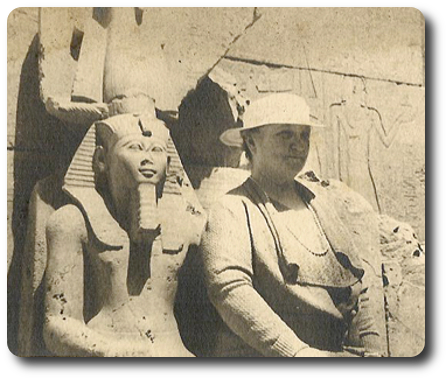
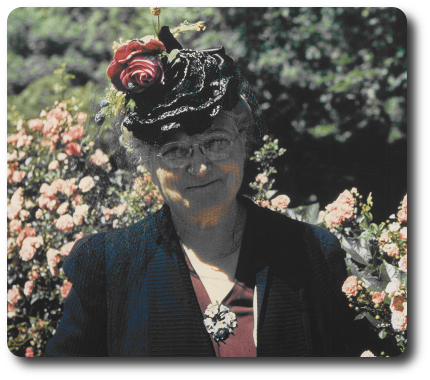
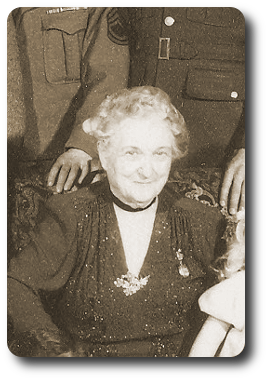
said the most influential person in his life was his mother, Henrietta, who
died in 1979.
His mother was described as a formidable
woman of strong moral conviction — a churchgoer who introduced Bill Wilson of
New York and Dr. Robert Smith of Akron in 1935. They
went on to found Alcoholics Anonymous in Akron.
Getting an education
Mr. Seiberling
attended King Elementary
School and Buchtel
High School in Akron
before going to Staunton Military Academy
in Staunton, Va.
He graduated from Harvard University
in 1941.
During World War II, he served in the Army
from 1942 to 1946, fighting in Europe. He
enlisted as a private and attained the rank of major. He earned the Legion of
Merit, the Bronze Star and three Battle Stars. He also earned the Medaille de la Reconnaissance Francaise
(France) and the Ordre de Leopold II (Belgium).
After his discharge, he earned a law degree
at Columbia University
in New York
in 1949.
From 1949 to 1954, he practiced law with
Donovan, Leisure, Newton and Irvine
in New York City.
He joined Goodyear in Akron in 1954 and remained here until he went
to Congress in 1971.
Locally, Mr. Seiberling
was a member of the Akron Regional Development Board and the Akron
Metropolitan Housing Authority. He was a three-term president of the
Akron-based Tri-County Regional Planning Commission.
He was a member of the United Community
Council of Summit County, the Stan Hywet Hall
Foundation, the United World Federalists of Akron and the Akron Bar
Association's World Peace Through Law committee.
He was a founder of the Summit County
Committee for Peace in Vietnam
and a member of the local Sierra Club and the Cuyahoga Valley Association.
In 1949, he married Elizabeth ''Betty''
Behr, a Vassar graduate. They shared the same interests, the same priorities,
the same outlook for 59 years of marriage.
She actually met her future husband while
at Vassar through his sister, who was a student there. They had their first
date in Paris
in 1945 — at an officer's mess.
He proposed during his last year of law
school in New York.
She later told reporters she accepted his proposal in part because he had
respect for women's intellectual capabilities.
In addition to his wife, he is survived by
their three sons, John B. of Washington,
D.C., David of Akron and
Stephen of Chapel Hill, N.C.; and one grandson, Evan. He also leaves sisters
Dorothy Seiberling of Long
Island, N.Y., and Mary S. Huhn of Pennsylvania.
A memorial service is planned for late
August or early September.
Billow funeral home in Fairlawn is handling
arrangements.
|